|
|
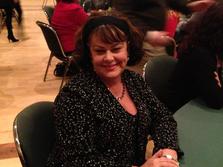
Victoria Dutko Leonelli
Genealogical Records Specialist |
|
|
Twenty years ago, October 4, 1994 several of us set out to form a Fayette County Genealogical Society. There were seventeen people in attendance at the meeting that day. The meeting was held at the Uniontown Public Library. Those people attending were listed by name. I was number nine to sign up and I am a founding member of the Fayette County Genealogical Society. The President was Kathryn Cooley Miller, Vice President, Jane Graft, Treasurer, Mary Rider Apicella, and Secretary, Aimee or Sonia Cesarino. There have been several members that have held various offices over the years. Pat Trimble being one of those people and served as president for many years. One of our first goals was to meet with the Fayette County Commissioners with the intent to be granted permission to access the records stored in the Fayette County Courthouse as well as those various records useful to genealogists that had been moved from the courthouse and stored in St. Joseph’s Church. The church was once located on South Mt. Vernon Avenue and was torn down for the sake of progress in the community. The County had some of their workers along with inmates of the Fayette County Prison help transport the records from the church back to the courthouse and the various offices of origination. Some records were placed in the 911 Building on Main Street. We planned to work along with the Fayette County Courthouse Row Officers as well as the Commissioners at the time to get some of the records, especially the tax records that had not been micro-filmed duplicated. We believed it was extremely important to obtain duplicates or copies of the original records. To this day, only some of the tax records have been filmed. Another main purpose in forming a society was to be a support group of the Pennsylvania Room at the Uniontown Public Library. Volunteers from the Society were to help serve the Pennsylvania Room by making a presence and volunteering in the Pennsylvania Room in the absence of the staff. The Fayette County Genealogical Society also carried on Victoria Hook’s tradition by publishing a newsletter to benefit those with Fayette County roots, four times a year. There wasn’t and hasn’t been a separate Library for the Fayette County Genealogical Society. The collection in the Pennsylvania Room belongs to the Uniontown Public Library. The Uniontown Public Library has a website that offers additional information about that institution along with their services and policies. The Genealogical Society’s meetings continue to be held at the Public Library in one of their meeting rooms. You may refer to the website for the Fayette County Genealogical Society. I was the former Curator of the Pennsylvania Room for eighteen years. I served as a volunteer for some years prior to that and helped the former Curator Mrs. Barbara Peterson keep the room opened on her days off. I answered hundreds of genealogical requests for the Library as well as the Fayette County Historical Society. Since then the Fayette County Historical Society has acquired a wonderful museum with a library and is located at the Abel Colley Tavern & Museum 7083 National Pike Smock, PA 15480. Tom Buckelew, a master wood worker, historian and antiques dealer deserves credit for the work that he has done to the building and the grounds, along with member Bill Zinn, several other members as well as some community minded people. I am proud to say that I played a role in helping Fayette County.
You must take the time to see what the Fayette County Historical Society, Inc. has done with the Abel Colley Tavern on Route 40 West. Christine Buckelew is the President of the Historical Society and her husband Tom Buckelew, retired professor has done a remarkable job along with other members in the restoration of the building. It is absolutely one of Fayette County's finest landmarks. The Fayette County Historical Society is gathering information for their historical and genealogical library. I am a lifetime member and have served as a former secretary and board of director in the past. We are always looking for donations of any kind. We need your help. The museum is being recognized as one of the best in Southwestern Pennsylvania. It is such a pleasant place to meet and learn from the terrific speakers that we have had at the meetings. We usually meet during the first Monday of each month unless we must cancel for a reason, such as poor weather conditions. There are just too many people to mention that have come together as a team to make the Fayette County Historical Society move in the right direction. And there are just too many things to mention that have been displayed and kept as part of the collection at the museum. I suggest you visit numerous times in order to take in all of the wonderful historical items the Historical Society offers to its visitors. You will be welcomed and pleased after you make the Abel Colley Tavern a stop on your travels throughout historical Fayette County. We have a great newsletter, The Fayette Gazette which permits us to communicate and pass along valuable information. We finally have a museum, a beautiful building in which to keep and treasure your old photographs, books, maps, artwork, postcards, etc. pertaining to Fayette County. You may contact the Society at their website, fayettehistoricalsociety@gmail.com, the phone number is 724-439-4422. Please join us. The Fayette County Historical Society cooperates with other active historical societies in the area. There are so many groups in Fayette County that are doing great things as well to help preserve our rich history. You may also contact Deborah Hull at the Fayette County Chamber of Commerce, she will offer some great advice and offer guidance as well at 724-437-4571 or email at info@fayettechamber.com. She has a wealth of historical knowledge. If you contact me, at genealeo@atlanticbb.net I will do my best to mention those areas and try to put you in contact with those with a sincere interest in Fayette County and those that have the knowledge and willingness to share. I have been involved in local history and genealogy research for more than two decades. I will try to get the information that you may need or point you in the right direction. Sincerely, Vicki Leonelli Genealogical researcher, local historian and author of Around Uniontown, Do You Remember When... in Fayette County, The Unexplained, Stories, Folklore and Legends of Fayette County, Pennsylvania and contributor of many published articles, and booklets pertaining to Uniontown and Fayette County, Pennsylvania by Victoria Dutko Leonelli -----------------------------------------------------------------------------------------------------------------------------------------------------The ABC's of Genealogy by Victoria Leonelli and Beth Bubonovich Always begin with yourself. Remember we are working backwards. Never skip generations. Write down your full name, date of birth, and all other important facts in your life. Do the same for each member of your family. Be a detective. Use every potential source of information to develop a clear portrayal of your ancestors. You will become a "family detective" Consider what resources are commonly used by other researchers and develop a checklist to use for every name you are researching. Begin with the three Cs. Courthouse, church, and cemetery records will be an essential part of your research. While visiting the Library, search census records, county histories, as well as newspaper collections. And most of all, cite your source! Document everything you include in your family history. Any data you may have which cannot be confirmed should not be included. Or state that you have no supporting documentation on a specific note. Look, instead, at these unproven facts as a starting point for future research. Every generation is important. Never skip generations and jump backwards. You may later find the missing ancestor and discover that you were concentrating all your efforts on the wrong family tree! Finding everything on the Internet you need to complete a family tree is an unrealistic expectation. Remember that the Internet is just another tool which family historians can utilize to assist them in their research. Genealogy research today can be conveniently stored on a computer, by using either special genealogy software or word processing and database programs. Remember to make a hard copy of all computer records to avoid a potential disaster. Hunt for records in the area where your ancestors originated and lived; that is where you will likely find the greatest amount of relevant information. Interview parents, grandparents, aunts, uncles, and others who may have some missing piece of your family puzzle. Get them talking and you may be surprised at what valuable insights you can gain into your ancestry. It is a good idea to tape your interviews for future reference. Journals diaries, letters, and photos can provide the information that will make you ancestors come to life. Your family history should be more than a list of names and vital statistics. Key records and information not easily available to you can sometimes be obtained from others. Network with those who share your interest, whether you are related or not. Learn the difference between primary and secondary sources. Always use primary sources to authenticate your findings. Most libraries, courthouses and historical and genealogical societies provide some researching services. When requesting their help or the help of anyone by post, always include a self-addressed, stamped business-size envelope. Never present someone else's research as your own. If you are using information from another researcher's efforts, give credit where credit is due. Organize your research. Whether you use a computer, a notebook, index cards or other methods of recording your research, develop a system for keeping your records straight, and use it consistently. Properly cite your sources! Carefully record the source of information and its physical location. A detailed citation allows you to locate a reference quickly and accurately for verification. Question any information gathered by other researchers or downloaded material from the Internet.Be sure the information has been documented and that every source has been properly cited. Respect all rules and policies posted by libraries and court houses. Many times you will be using delicate, rare, one -of -a -kind research materials which cannot be replaced. Share your information and help fellow researchers. We are learning and working together. Try to locate any existing church records, they may establish dates of births, baptisms, marriages, and deaths. Unexpected discoveries in your ancestry should not discourage you. Horse thieves and other unsavory characters may show up in your family tree, but do not be embarrassed or discouraged. Each and every family is unique and interesting. Just think how well you turned out despite some of your ancestors! Veteran's pension records provide information about soldiers and their spouses. Service records, or at least, lists of soldiers , which exist for all wars in which our county has participated, are also invaluable tools for the family researcher. Whenever possible, use primary sources to verify exact dates of birth, death, and marriages. Xerox or photocopy relevant documents, such as courthouse records and other primary sources. It is much better to have the complete text of these documents in your files to refer to as you continue your research. Your family may not have remained in one location all their lives. Tracing their whereabouts through church census property transfers or other resources will often help you to accurately chart their migration. Zero in on wills and estate records as a source for names of children, siblings spouses in-laws, and other persons who were part of your ancestor's life. They are a primary source and very often confirm the relationships you may not be able to prove with other documents. Happy Hunting! Vicki Leonelli Beth Bubonovich |


|